
FLEET FUEL CONTROL
Fuel Monitoring System
TAI Capital designs fuel monitoring around your vehicles, tanks and existing systems. We combine calibrated fuel measurements, CAN data and transaction records to make refuelling, consumption and possible drains easier to verify across a mixed fleet.
Start by checking paid volume against measured tank activity on representative vehicles or assets.
Tank events
Consumption reports
Fuel-card reconciliation
SYSTEM OVERVIEW
What Is a Fuel Monitoring System?
A fuel monitoring system connects measurements from a tank or engine with vehicle activity and fuel purchases. It helps an operator record what was delivered, estimate what was consumed and investigate changes that do not match the expected operating pattern. The system is useful only when the method is suited to the asset, calibrated where necessary and checked against real trips and refuelling records.
From signal to investigation
In a TAI Capital project, the data path runs from compatible sensors and vehicle interfaces through a telematics platform to alerts, reports and an investigation workflow. A sudden level change is a reason to review the evidence, not proof of theft by itself.
FUEL EVENTS
Turn Fuel Events Into Verifiable Decisions
Investigate Possible Drains
Flag a sudden fall in tank level and review it with ignition state, movement, place and time. Thresholds are adjusted to the vehicle and the measurement method so that slopes, sloshing and signal noise are less likely to generate misleading alerts.
Signal + operating context
Check Every Refuelling Event
Match the measured rise with the vehicle, station or depot, time and the available purchase record. Send differences outside an agreed tolerance to a person who can inspect receipts, calibration and delayed transaction data.
Tank event + purchase record
Understand Real Consumption
Compare litres per 100 kilometres, engine hour, route or shift where the source data supports that measure. Review similar assignments against the fleet’s own baseline, including idling and changes in operating conditions.
Asset-specific baseline
MEASUREMENT DESIGN
Choose the Right Way to Measure Fuel
A truck, an excavator and a generator should not automatically receive the same sensor configuration. TAI Capital reviews tank shape, engine data, power and installation constraints before recommending one source or a combination. Each source answers a different question.
01 / DIRECT TANK MEASUREMENT
Calibrated tank sensor
Measures level changes in the tank. Once calibrated for the tank geometry, it can support refuelling and possible drain detection.
EVIDENCE
Level changes, fills and potential drains
Important limit
Tank access and a sound calibration curve are required
02 / NON-INTRUSIVE OPTION
External ultrasonic sensor
Estimates fuel level through the tank wall where the tank and installation surface are suitable.
EVIDENCE
Tank-level changes without an intrusive probe
Important limit
Tank wall, geometry, mounting and environment must be assessed
03 / FUEL LINE MEASUREMENT
Flow meter
Measures fuel passing through an engine supply line. Return flow requires careful engineering.
EVIDENCE
Fuel movement through an engine circuit
Important limit
Does not locate a tank-side drain on its own
04 / VEHICLE DATA
CAN / J1939
Uses the fuel values the vehicle ECU makes available and can cross-check direct measurements.
EVIDENCE
Reported vehicle fuel values and operating state
Important limit
Parameters and resolution vary by make and model
05 / FINANCIAL RECORD
Fuel-card data
Provides the purchased volume, price, location and transaction time for reconciliation with the physical event.
EVIDENCE
What the issuer recorded as a purchase
Important limit
Does not prove delivery into a specific tank
Where useful, tank data, CAN values and card records are compared rather than treated as interchangeable. Explore fuel monitoring equipment ↗
REPORTING AND REVIEW
See the Evidence Behind Each Fuel Exception
A usable report links the fuel-level curve with refuelling, trips, idle time, location and communication status. Dispatchers can review the time and volume of an event, while managers can compare consumption by asset group, route or reporting period. Filters and scheduled exports help turn an alert into an auditable record.
Fuel views can be configured in partner platforms Wialon, Axenta and EVA PRO, or in Titan, TAI Capital’s proprietary platform. Fleet One is our mobile app where the selected project architecture supports the required view. Reports, connectivity and the available fuel functions are confirmed during the assessment; these products should not be presented as one shared interface.
Compare fleet management platforms ↗
Cloud or on-premise deployment and data retention from 30 days to five years are defined for the project.

Titan · Fuel Refills and Drains
Interface screenshot from TAI Capital’s proprietary platform.
See Titan’s idling fuel report

See a Wialon reporting example

PUBLISHED FUEL PROJECT
Fuel Dispensing Control From Station to Vehicle Tank
At a client-operated fuel station, TAI Capital added RFID authorisation for the fuel-truck driver and the receiving driver, measured the dispensed volume and read the vehicle’s tank sensor. This linked station records with vehicle fuel data.
After four months, the project reported the monthly diesel savings shown in the chart. Equipment repair and calibration were also part of the work, so the result is specific to this station and is not a forecast for tank sensor installations alone.
PUBLISHED PROJECT RESULT
Monthly diesel savings at the client-operated station
4,800–10,000
0
2,000
4,000
6,000
8,000
10,000
TRANSACTION MATCHING
Reconcile Fuel-Card Purchases With Tank Events
A fuel card shows that a transaction took place; a tank event shows a measured change. Our reconciliation workflow links card, asset, time, location and volume, then flags differences for review. The result is an exception queue, not an automatic accusation or an assumption that every mismatch is a loss.
TAI Capital operates a fuel-card integration service that connects purchase records with measured tank events. For additional vendors, we assess the available API or export format, asset identifiers and update frequency, then scope the integration and testing when the required data is available. Transaction timing, twin tanks and calibration tolerances are part of the acceptance criteria.

DELIVERY PROCESS
Build and Validate a Fuel-Control Baseline
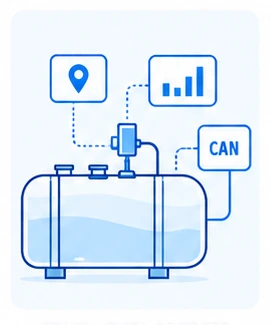
01 / ASSESS
Inspect tanks and data sources
Identify tank shapes and counts, accessible CAN values, installed sensors, card exports and the normal route or work-cycle patterns for each asset group.
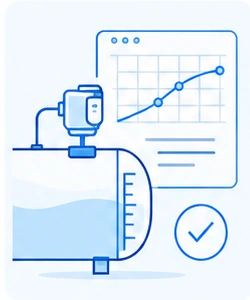
02 / MEASURE
Calibrate representative assets
Select a measurement method, verify installation and turn raw readings into a usable volume curve where tank-level measurement is chosen. Record test fills and known operating conditions.
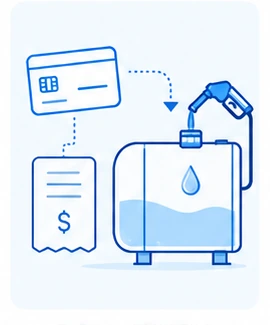
03 / RECONCILE
Match fills, usage and purchases
Connect the required fuel signals and card records, resolve asset identifiers and time differences, then set separate tolerances for refuelling, drains and consumption.
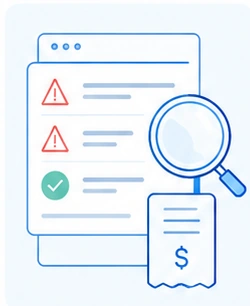
04 / VALIDATE
Review pilot exceptions before scaling
Compare flagged events with receipts and actual operations. Correct sensor noise, calibration or mapping issues, agree an investigation owner and extend only the rules that passed the pilot.
ASSET TYPES
Fuel Monitoring for Different Assets
Trucks and buses
Review refuelling, distance, route and engine operation together. Multi-tank vehicles may need more than one measurement point and careful calibration.
Construction and heavy equipment
Use engine hours, shifts and work cycles when kilometres do not explain fuel use. Site rules help separate productive work from idle time and transfers.
Generators and stationary tanks
Track deliveries, consumption and low-level warnings at remote sites. Communications, power and reporting cadence are planned for each location.
Marine and specialist vehicles
Assess tank movement, return fuel, installation conditions and engine configuration before selecting level or flow measurement. The final design is confirmed against the actual vessel or asset.
PROJECT PRICING
What Determines Fuel Monitoring System Cost?
We prepare a project estimate after reviewing the fleet and the evidence you need. An existing installation may supply useful data, while another project may require new measurement points, calibration or transaction integration. A pilot helps establish the scope before a full rollout.
Tell us the fleet type and size, country, current equipment and fuel records.
01 / FLEET
Fleet and tanks
Asset count, vehicle mix, tank count and geometry.
02 / MEASUREMENT
Measurement and installation
03 / SOFTWARE
Software and integration
Chosen platform, cloud or on-premise setup, card or business-system data.
04 / OPERATIONS
Operations
Communications, retention, reports, training and support scope.
RELATED PAGES
Explore the Fuel-Control Project Stack
FAQ
Frequently Asked Questions
Can fuel monitoring detect a drain while a truck is moving?
It can flag an unusual level decrease for review when the selected sensor, sampling and configuration support it. Vehicle movement creates noise, so the event should be checked with engine activity, trip history and the tank’s calibration.
How accurate is a fuel monitoring system?
There is no one accuracy figure for every fleet. The method, tank shape, installation, calibration, environment and quality of the source data all matter. We validate performance on representative assets during the project.
How do you monitor a truck with two fuel tanks?
The design may require measurements for both tanks and a combined volume calculation. We check the tank geometry, transfer behaviour and available ECU data, then validate the resulting events on the actual vehicle.
Can you integrate fuel cards from different vendors?
Yes. TAI Capital has a fuel-card integration service. We can assess additional vendors where an API or suitable export is available, then define field mapping, tests and ongoing data support for the project. For a vehicle-side example of fuel-card reconciliation, see the 845-truck CAN bus project.
Can generators and static tanks be monitored?
Yes. We can scope level, deliveries, consumption and low-volume alerts for stationary assets. Communications, power and the reporting interval are selected for the site rather than copied from a vehicle configuration.
What information is needed to scope a fuel pilot?
Share asset types and counts, tank arrangements, current measurement equipment, available fuel-card files and a few examples of the discrepancies you need to investigate. We then define representative assets and acceptance criteria with your team.
NEXT STEP
Build a Fuel-Control Baseline on Your Own Fleet
Tell us the fuel question you need to answer: unexplained tank drops, mismatched card purchases or consumption by work cycle. We will outline the data needed to test it and propose an individual pilot on your fleet. TAI Capital implements projects in MENA and Europe; worldwide equipment delivery, remote support and installation are arranged directly or with qualified partners according to location and scope. First-line and second-line teams support the agreed system.