
Project Overview
Fleet operators often face the same challenge: vehicle data, fuel activity, driver behavior, video, routes, maintenance, and reports are managed through separate tools, making daily fleet control less transparent and harder to scale.
Titan was developed by TAI Capital as a proprietary fleet management platform for corporate transport operations. The platform brings transport monitoring, fuel control, video surveillance, events, reports, routes, maintenance, analytics, integrations, and connected telematics hardware into one fleet management ecosystem.
The project became the foundation for a scalable platform designed to improve fleet visibility, reduce operational losses, automate reporting, and centralize key fleet management processes.
Fleet Challenges Before Titan
The project was focused on creating a centralized fleet management system that could support complex transport operations and reduce dependence on fragmented tools or manual workflows.
The project focused on solving the core problems of the fleet:
- Fuel theft and misuse — uncontrolled refueling, draining, idle fuel use, and abnormal consumption increased operating costs.
- Limited operational transparency — fleet managers needed a clearer view of vehicles, drivers, routes, and daily transport activity.
- Fragmented device ecosystem — different types of trackers, fuel sensors, smart locks, BLE tags, video devices, and non-standard device parameters required unified support instead of being managed through separate platforms.
- Manual reporting — the team spent too much time collecting and processing data instead of using reports for faster decisions.
- Weak driver discipline — speeding, idle time, unsafe behavior, and route deviations affected safety and service quality.
- Disconnected incident review — events, video, and vehicle data were not connected enough for fast investigation of operational situations.
- Growing complexity of fleet control — as operations scaled, fragmented processes made it harder to manage the fleet through separate tools.
Solution
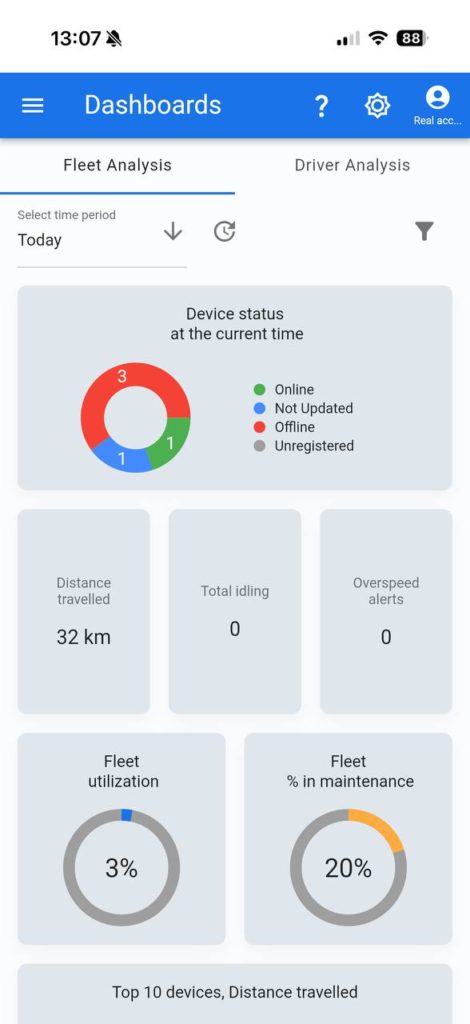
The solution turned fragmented fleet control into a centralized digital environment for daily decision-making. Titan was structured around several core functional areas.
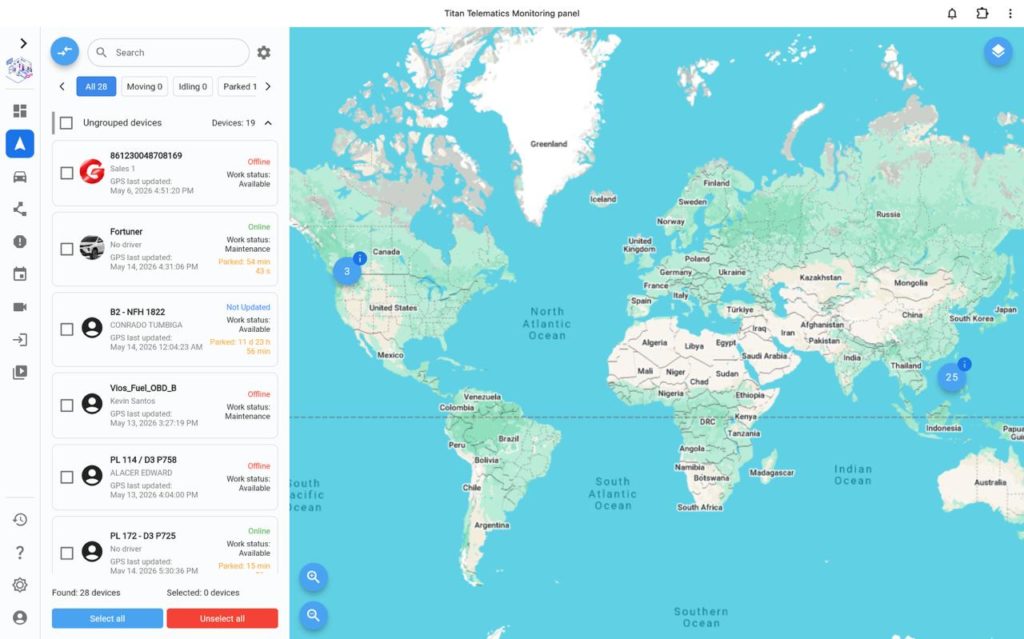
Real-Time Monitoring
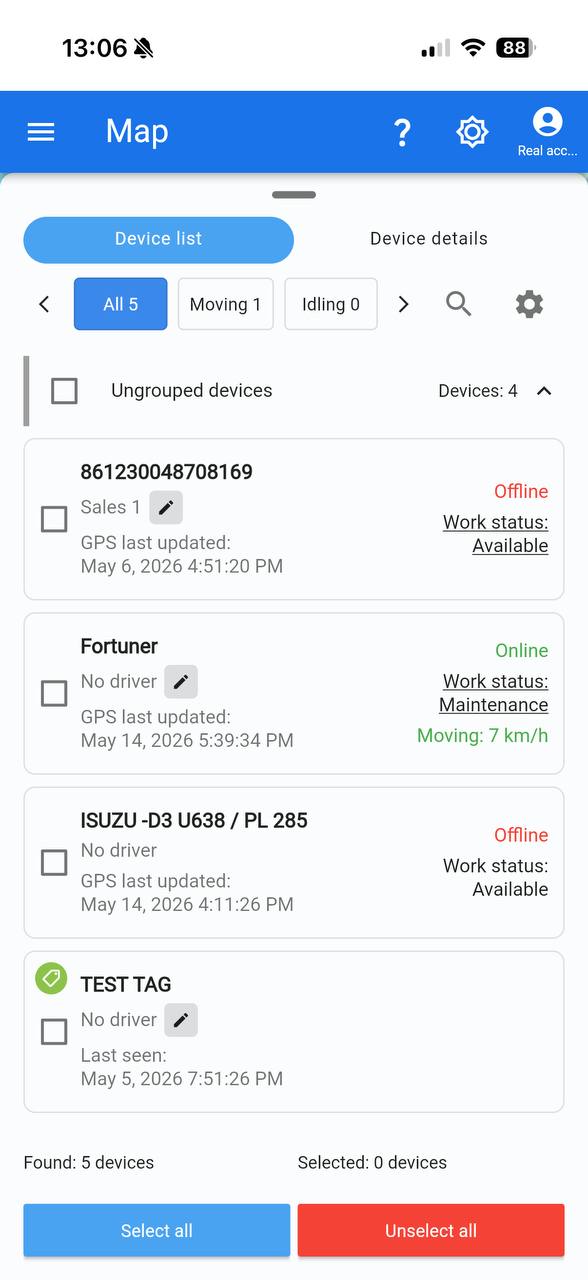
Titan provides an interactive monitoring panel for daily fleet control. Users can view vehicle location, device status, driver data, current address, odometer readings, ignition status, speed, movement status, telemetry, trip history, recent events, analytics, and live video from connected devices.
Fuel Control
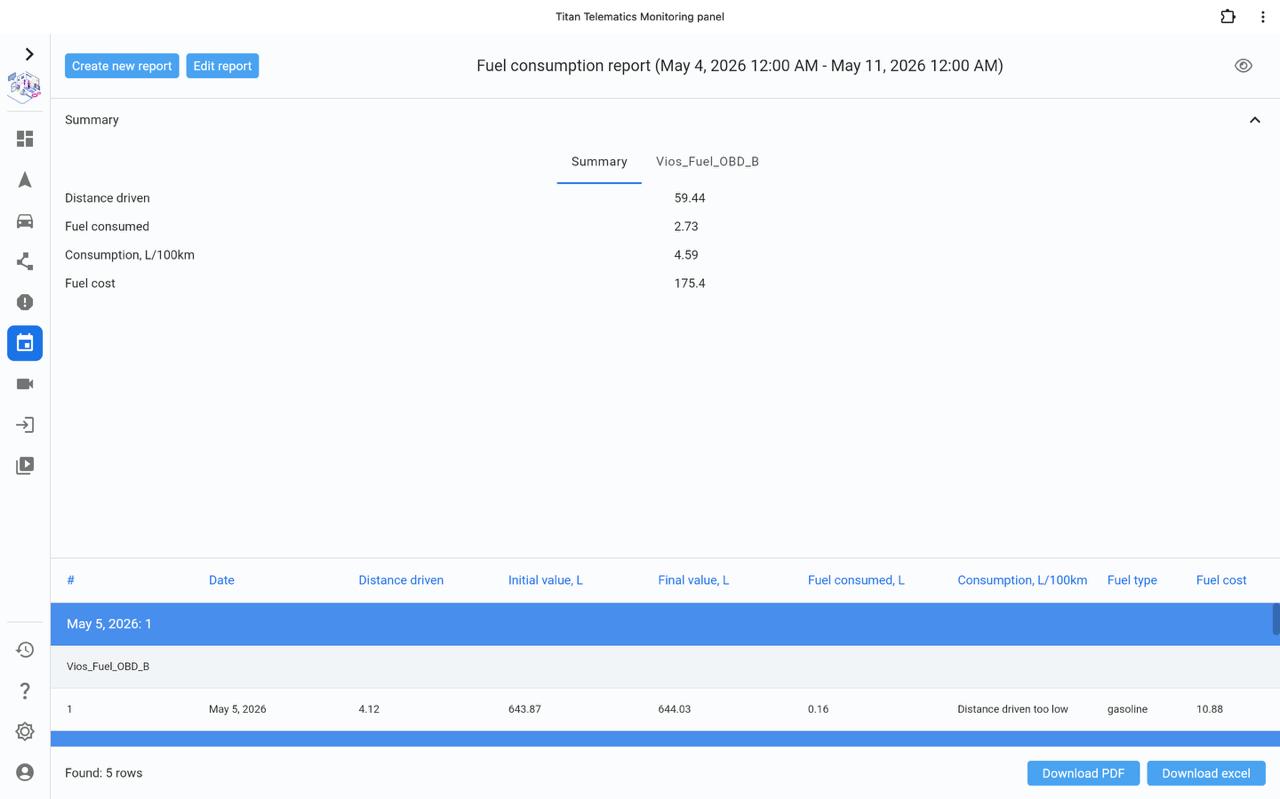
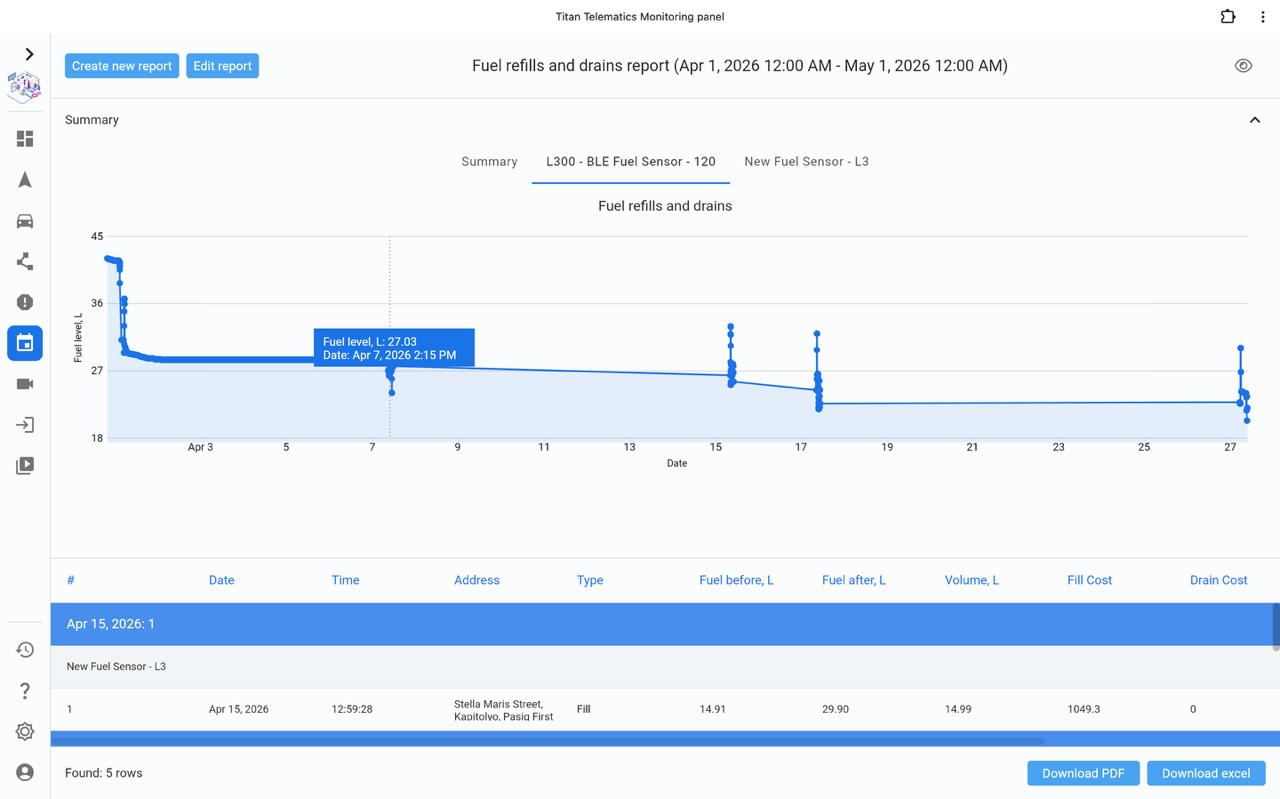
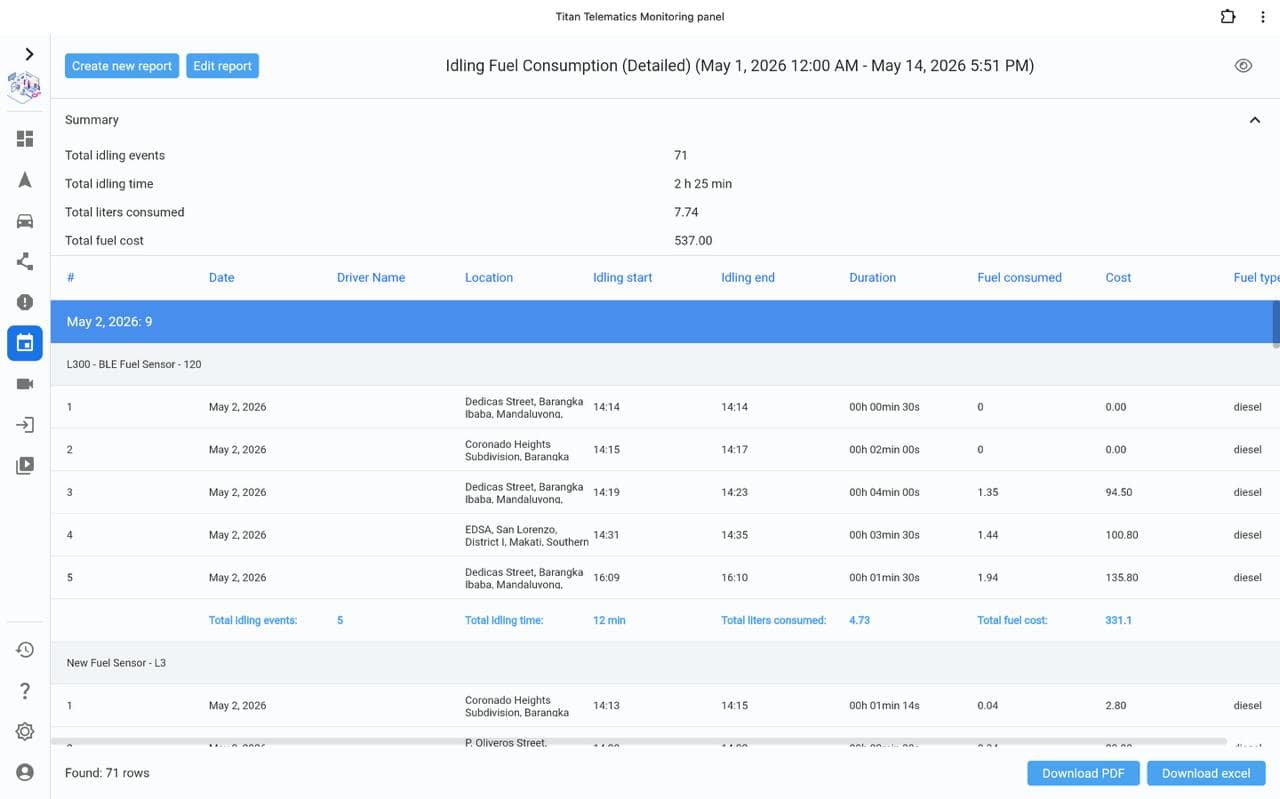
The platform supports fuel consumption monitoring, refueling and draining analysis, idle fuel use tracking, and fuel-related reports. Fuel activity can be reviewed together with time, location, vehicle activity, load, terrain, and weather factors, helping fleet teams identify abnormal patterns and improve fuel transparency.
Reports & Analytics
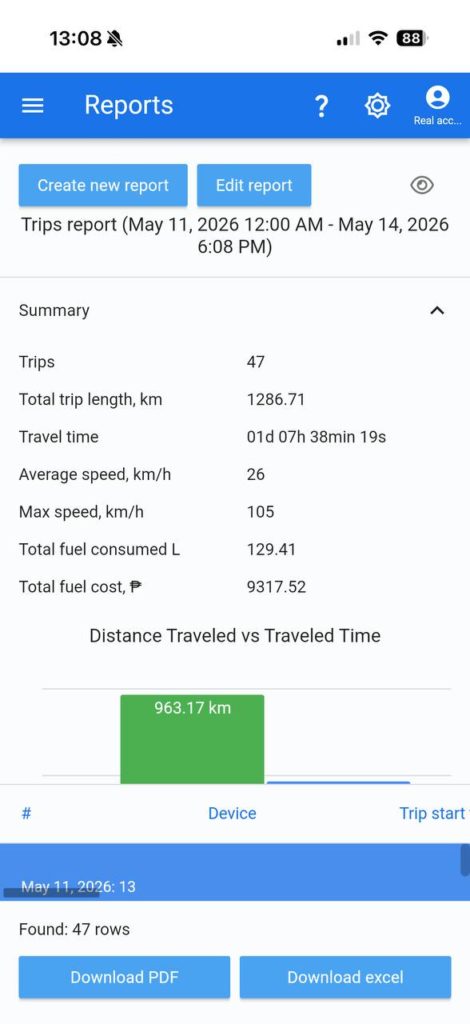
Titan includes 18+ report types covering trips, parking, idle time, geofence and place visits, engine hours, mileage, driver changes, speeding, fuel accounting, events, video events, temperature sensors, and deliveries. Reports can be exported in PDF or Excel and scheduled for automatic email delivery.
Events & Notifications
The system supports 19 predefined event types and custom events based on device parameters. Users can configure notification rules, define event activity periods, set intervals between repeated events, review events on the map, open event locations in Google Street View, and access video for video-related events.
Video Surveillance
Titan supports live video viewing, archived video access, video events, and video-related alerts. This helps fleet teams review incidents, monitor critical situations, and connect video data with vehicle tracking, events, and operational analytics inside one platform.
Routes, Deliveries & Geofences
The platform supports delivery planning, route optimization, route execution monitoring, and public tracking links for customers. Titan also includes geofences and places management, with routes, polygons, circles, and rectangles, as well as geofence alerts, map-based editing tools, and Excel upload for geofence data.
Maintenance & Driver Management
Titan supports maintenance management, service work control, driver records, driving behavior analytics, idle time analysis, speeding control, and driver rating based on operational indicators. This gives fleet teams better visibility into vehicle condition, driver discipline, and daily fleet performance.
Mobile Access & Integrations
Titan includes PWA access and push notifications for mobile users. The platform also supports REST API integrations, webhooks, map services, SMS gateways, and external API connections, allowing Titan to work with other business and telematics systems.
Account Plans & Access Control
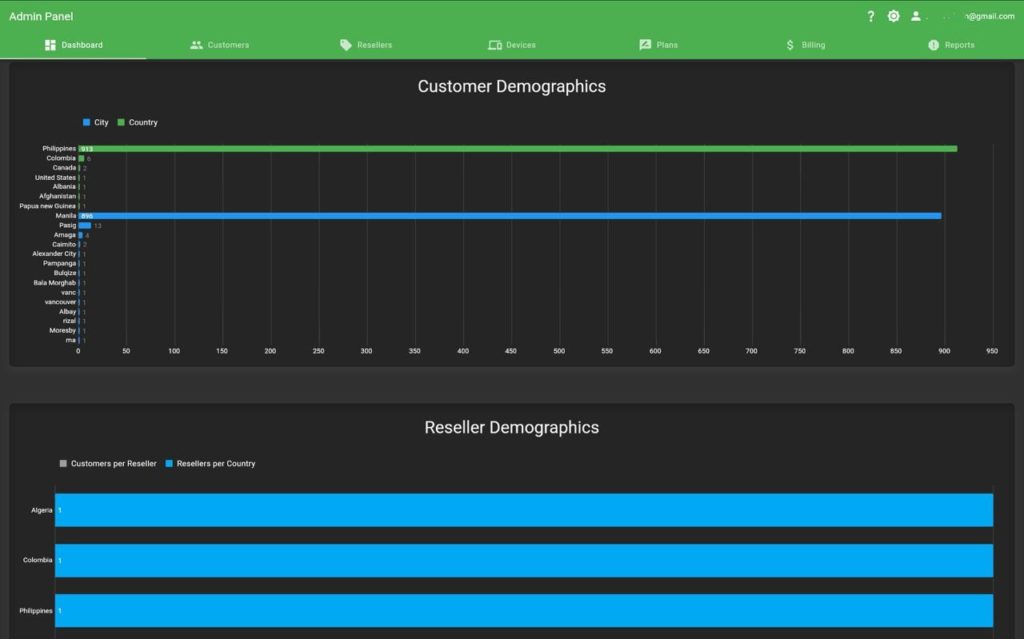
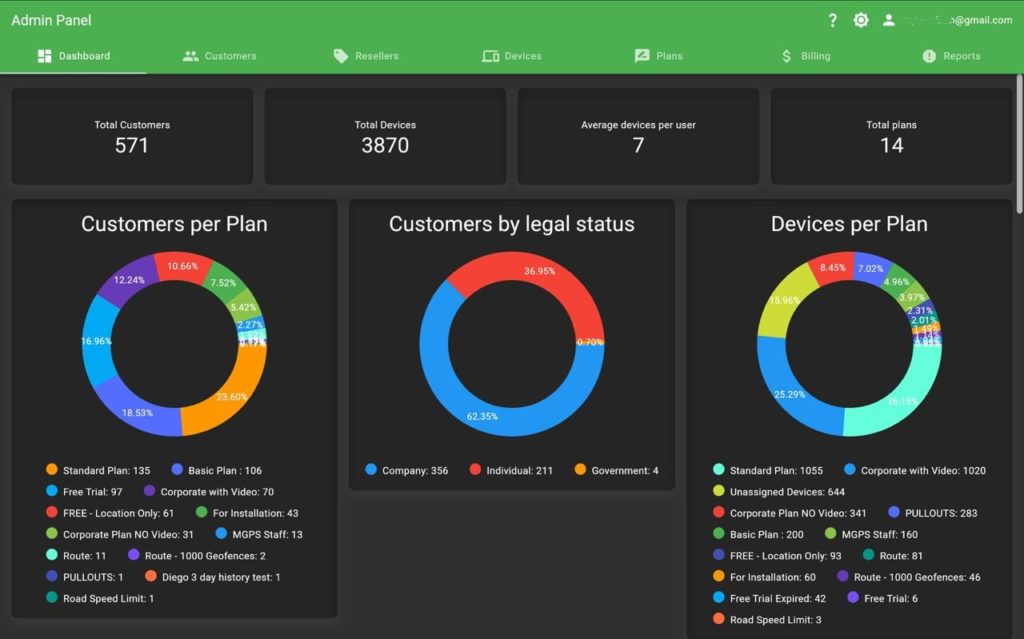
Titan’s backend admin panel allows superadmins to configure account plans and control access to platform features for users and subusers. This makes it possible to define who can use specific modules, including dashboards, maps, reports, deliveries, geofences, events, maintenance tools, API access, and other platform functions.
Device & Protocol Flexibility
Titan supports a wide range of fleet devices and additional parameters, including tracking devices, smart locks, extra fuel sensors, BLE tags, video devices, and other telematics equipment. When a required device, protocol, subprotocol, or parameter is not available in the standard setup, it can be configured individually.
Implementation
The implementation focused on configuring and launching Titan within the client’s daily fleet operations. The team connected fleet units and telematics devices, set up user roles, monitoring parameters, reporting and notification scenarios, fuel-control settings, geofences, video access, and route-related workflows.
Before launch, the configured workflows were checked against the client’s operational processes. Device parameters, protocol and subprotocol mappings, account plans, and user access rights were also configured so different devices and user roles could work inside one platform.
After implementation, Titan’s 24/7 technical support helped maintain stable day-to-day platform operation.
Results
Titan helped the client move from fragmented fleet control to a more transparent, measurable, and data-driven operating model. The implementation delivered results across the areas that directly affect fleet costs, safety, and service quality:
- 20–30% reduction in logistics and fuel costs;
- improved visibility and transparency across daily fleet operations;
- stronger control over driver discipline, speeding, idle time, and route performance;
- a personalized interface adapted to the client’s operational needs;
- improved safety control and service quality.
Related Industries
This case is relevant for organizations that need centralized control over vehicles, drivers, fuel, routes, maintenance, reports, and operational data.
- Logistics and Transport Operators
- Corporate Fleets
- Service Fleets
- Courier and Delivery Companies
- Municipal and Government Transport
Also relevant for: Telematics Integrators and Resellers
Want to see how Titan can work for your fleet?
Titan is more than a vehicle monitoring platform. It is a complete fleet management ecosystem that brings tracking, fuel control, video, reports, routes, maintenance, analytics, and integrations into one scalable solution for fleet operators and telematics partners.